
Blog
Yoga for Stress Relief: Poses and Techniques for Relaxation

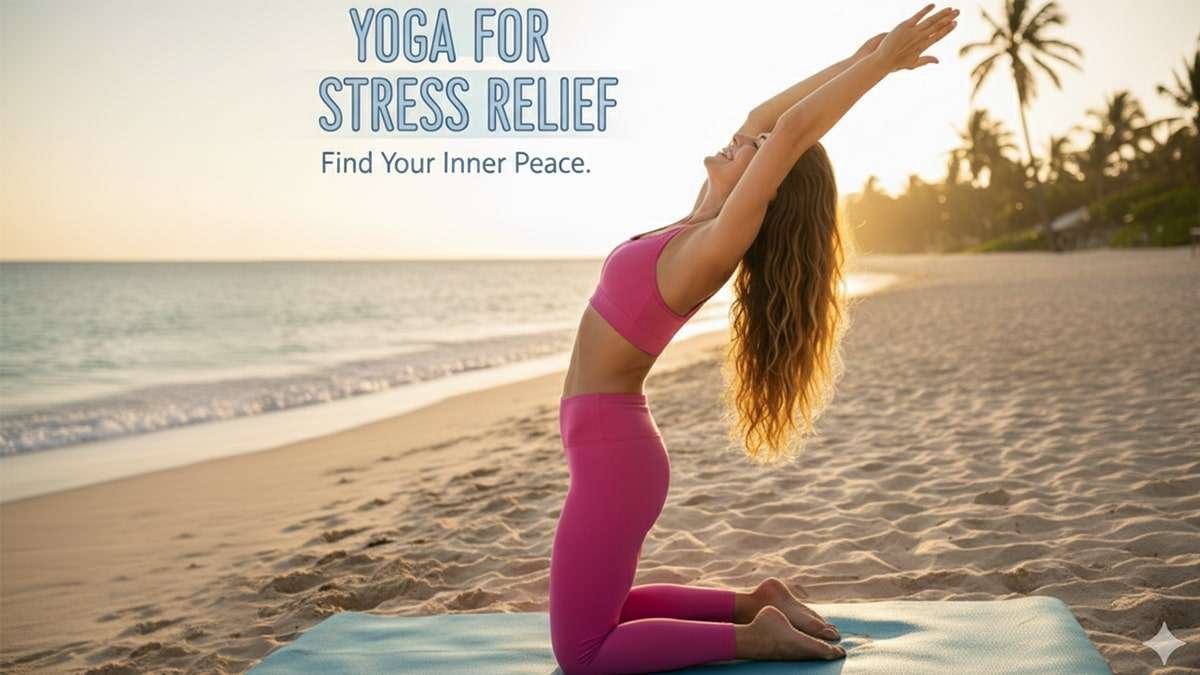
Do you feel like you can’t handle everything? Stress & Anxiety is a normal part of life these days, and it has a big impact on our mental and physical health. As we try to deal with this Stress Relief, yoga is a great way to relax and feel better.
Yoga is a full-body practice that includes meditation, breathing exercises, and physical poses. It has its roots in ancient India. Yoga not only strengthens the body, but it also helps you find peace of mind in the midst of life’s chaos. This article will focus on different yoga poses and techniques that are meant to help you relax.
These techniques can help you feel more calm and stable in your daily life, no matter how long you’ve been doing yoga or how new you are to it. Find out how yoga can change the way you deal with Stress Relief and relaxation.
The Power of Breath: Pranayama
Breath is an important part of yoga. Pranayama, or controlled breathing, is an important way to calm your mind and ease your Stress Relief. Deep belly breathing is a very simple but effective way to breathe. To do this, make sure you are comfortable sitting or lying down.
Put one hand on your stomach and the other on your chest. As you breathe in deeply through your nose, your stomach should expand and your chest should stay still. Breathe out through your mouth and feel your belly drop. This kind of deep, rhythmic breathing activates the parasympathetic nervous system, which helps Stress Relief and make you feel more relaxed.
Nadi Shodhana: Alternate Nostril Breathing
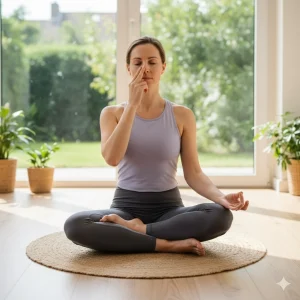
Your right ring finger closes the left nostril and opens the right one, which is where you breathe out. Then, breathe in through the right nostril again, close it with your thumb, and breathe out through the left nostril. This way of breathing back and forth not only calms our nerves, but it also helps us focus and pay attention.
Relaxation Poses: Child’s Pose (Balasana)
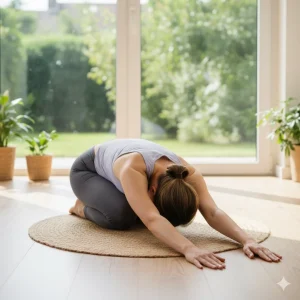 Child’s Pose is a great way to calm down, relax your mind, and ease muscle tension. Kneel on the floor with both big toes touching each other or lying next to each other. Then sit back on your heels. Put your knees about hip-width apart and bend forward. You can either extend your arms in front of you or let them rest by your sides.
Let your forehead rest on the mat and breathe in and out slowly. This pose gently stretches the thighs, hips, and lower back while also making you feel safe and grounded.
Forward Bend: Uttanasana
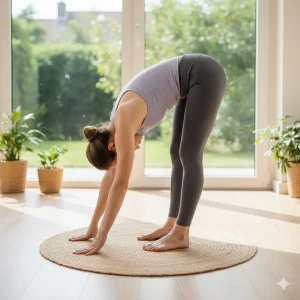 The standing forward bend, or Uttanasana, is a relaxing pose that works the muscles in the neck, shoulders, and spine. Stand with your feet about hip-width apart to do this pose. As you breathe out, stretch your back and bend your knees slightly as you fold forward from your hips.
Let your head hang down and rest your hands on either side of your shins or reach for your opposite elbows. Pay attention to your breathing and let go of some of the Stress Relief you feel with each breath. This position helps blood flow better, makes you less tired, and calms your nerves.
Gentle Stretch: Cat-Cow Pose (Marjaryasana-Bitilasana)
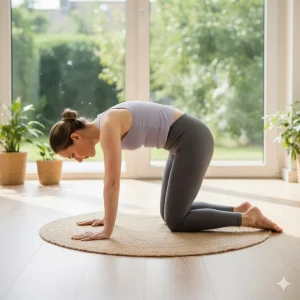 The Cat-Cow Pose is one of the warm-up moves that helps the spine become more flexible. To do Cat-Cow Pose, start by getting on all fours like a table. As you breathe deeply, arch your back, lift your nose toward the ceiling, and push your tailbone up while lowering your belly (Cow Pose).
In Cat Pose, round your lower back away from the floor, bring your chin to your chest, and squeeze your navel toward your spine as you exhale. With each breath, switch between these two positions, paying close attention to how smoothly the backbone moves. This sequence of poses helps relieve headaches, relaxes the shoulders and back, and makes the spine more flexible.
Grounding Pose: Legs-Up-the-Wall (Viparita Karani)
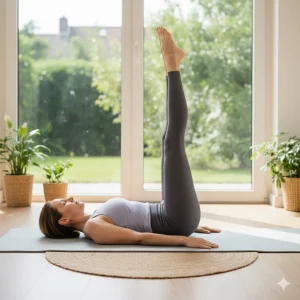
The Legs-Up-the-Wall Pose, or Viparita Karani, is very important for relaxing and lowering Stress Relief. To do this pose, sit next to a wall and lie down flat on your back. As much as you can, swing your legs up the wall and move your hips toward the wall. Put your arms out to the sides or gently rest them on your stomach.
Close your eyes and take a deep breath to let your body relax Completely. This pose helps blood flow better, reduces swelling in the legs, and calms the nervous system. All of these things are good for relieving anxiety and giving you peace of mind.
Meditation: Mindfulness and Body Scan
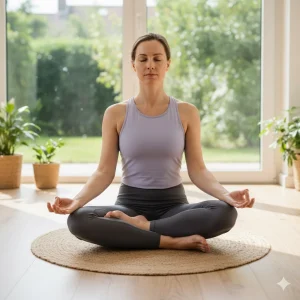 In addition to physical poses and breathing Exercises, Yoga also includes Meditation to help with Stress Relief. Mindfulness meditation means being aware of what’s going on right now without judging it. Sit down in a comfortable position, close your eyes, and pay attention to your breathing. Breathe in and out slowly through your nose and feel the air coming in and out of you.
When you lose focus, gently bring yourself back by paying attention to your breathing’s pattern of inhalation and exhalation. Another effective meditation technique is a body scan, whereby you lie comfortably with closed eyes. Slowly move your focus from the top of your head to each part of your body, paying attention to any pain or tension. As you move to your toes, breathe into each area and consciously relax and let go of tension. This practice helps you become more aware of your body, lowers Stress Relief, and helps you relax in general.
Bridge Pose (Setu Bandhasana)
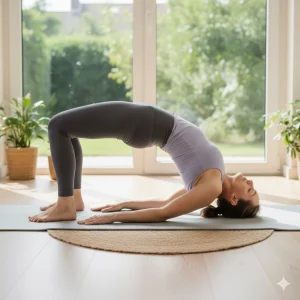 Setu Bandhasana, also known as the Bridge Pose, is a gentle backbend that opens the chest, lengthens the spine, and calms the mind. To do this pose, lie on your back with your knees bent and your feet flat on the floor. Put your hands by your sides with your palms facing down. Push your feet into the ground while lifting your hips up toward the ceiling. Hold your hands together under you so you can press your arms against the mat to stay steady.
For a few breaths, hold the pose and think about lifting your chest and opening your lungs. This pose not only strengthens the glutes and back, but it also helps you relax by releasing tension in the lower back and improving blood flow.
Corpse Pose (Savasana)
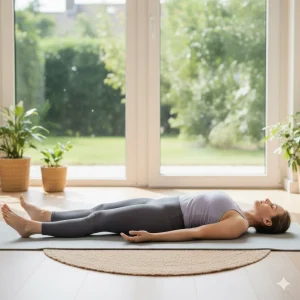 Savasana, also called the corpse pose, is a final relaxation pose that people do at the end of yoga classes to let their minds and bodies rest. To do Savasana, lie on your back with your legs comfortably apart and your arms at your sides with your palms facing up.
Let your body sink into the mat as you close your eyes and take slow, deep breaths. Now, concentrate on letting go of any remaining Stress Relief in your body, from your toes to your head. Letting go of all outside thoughts will still help you relax. Regular practice of Savasana has been shown to help with Stress Relief symptoms, lower blood pressure, and bring about a sense of inner peace.
Conclusion
Yoga helps you Stress Relief by using a combination of physical poses, breathing exercises, and meditation. Adding these things to your daily routine can help you relax your body and mind and lessen the effects of Stress Relief on your health. These poses, techniques, and mats that are easy to clean and use are great for anyone who wants to manage Stress Relief and relax, whether you’re new to yoga or have been doing it for a long time.
Regular practice makes you physically healthier and helps you think more clearly, feel more balanced, and connect more deeply with yourself. Yoga has the power to change your life. Find a way to find peace and calm in the middle of the chaos of modern life.